

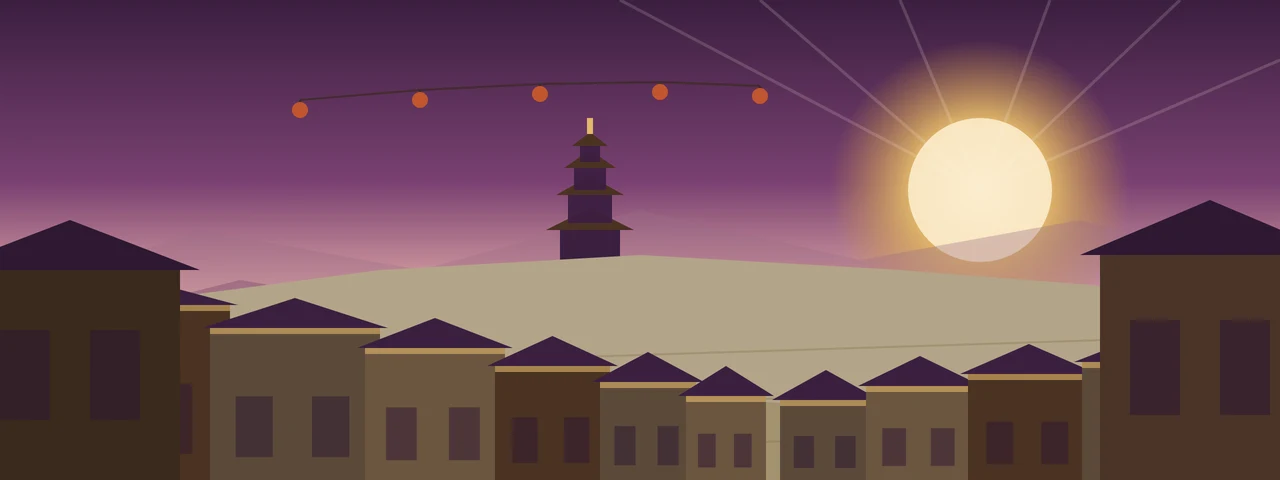
Higashiyama — the eastern hills — is the district most people picture when they picture Kyoto: preserved wooden streets, a hillside temple, and Gion's lantern-lit lanes. It's also, unsurprisingly, the most crowded part of the city for most of the day. Timing matters here more than almost anywhere else in Kyoto.
Layout and how to approach it
Higashiyama runs north-south along the base of the eastern hills, and the classic route links Kiyomizu-dera at the southern end, through the preserved lanes of Sannenzaka and Ninenzaka, into Gion, and up to Yasaka Shrine and Maruyama Park. Walked start to finish, it's a couple of hours without stopping — realistically, plan half a day.
Kiyomizu-dera and the approach lanes
Kiyomizu-dera's wooden stage, built without nails, extends out over the hillside with views back across the city; it's one of Kyoto's most photographed sights for good reason. The approach through Sannenzaka and Ninenzaka — stepped lanes lined with old shopfronts — is as much the point as the temple itself, but it is where the crowds concentrate hardest from mid-morning on.
Gion and geisha etiquette
Gion is Kyoto's best-known geisha district, and you may see geiko (Kyoto's term for geisha) or maiko (apprentices) moving between appointments in the early evening. They are working, not performing for photos — see our full etiquette guide before you go, particularly around the private lanes where photography has been restricted due to past harassment of geiko by tourists.
Yasaka Shrine and Maruyama Park
At the northern end, Yasaka Shrine marks the transition into Maruyama Park, Kyoto's oldest public park and a major hanami (cherry blossom viewing) spot in spring, centred on a large weeping cherry tree.
Getting there
No train line runs directly through central Higashiyama — the bus is the standard way in, or a taxi for the last stretch if you're starting from Kiyomizu-dera. It's walkable end-to-end, but wear shoes for stepped, sometimes uneven lanes.