
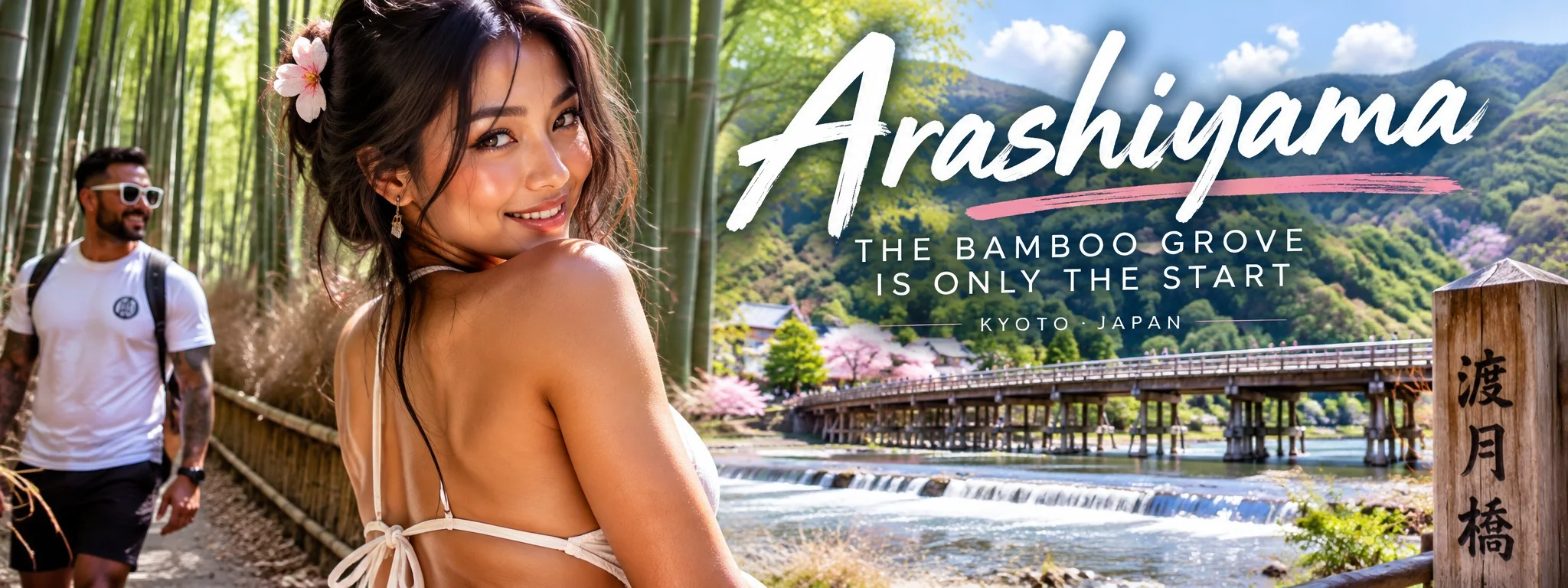
Arashiyama is Kyoto's western sightseeing district: bamboo, temple gardens, the Katsura River and wooded hills packed into an area that is easy to reach but notoriously busy. The trick is not to treat it as one photo stop. A good visit links the bamboo grove with Tenryu-ji and the river, then either leaves before the midday crush or continues into quieter Saga and Okusaga.
Why Arashiyama gets so crowded
Arashiyama concentrates several famous sights into a small walkable zone. The bamboo path is free and always accessible, Tenryu-ji opens early, Togetsukyo Bridge is a natural gathering point and the main streets between the stations and river funnel day-trippers through the same few blocks. That makes timing matter more here than at many Kyoto districts.
If you want the atmospheric version seen in travel photographs, aim for the first part of the morning. By late morning, expect people rather than solitude. That does not make the district a write-off: the river, temple garden and side streets still reward a visit, but your expectations should match the reality.
The bamboo grove: striking, short and not a secret
Chikurin no Michi is a public path through tall bamboo rather than a huge forest attraction with an entrance gate. The most photographed section is relatively short, which is why even moderate visitor numbers can make it feel packed. Walk through it, enjoy the sound and scale, then keep moving instead of building your whole half-day around one image.
Early morning is best for space. If you arrive later, concentrate on looking up into the canopy and accepting the crowd rather than fighting for an empty-path photograph. Be considerate with tripods and staged shoots: stopping across the whole path makes a busy place worse for everyone.
Tenryu-ji is the anchor attraction
Tenryu-ji, a UNESCO-listed Zen temple beside the bamboo area, gives Arashiyama more depth than the famous path alone. Its Sogenchi garden uses the western hills as borrowed scenery, so the landscape beyond the temple is part of the composition. The north gate also connects naturally toward the bamboo grove, making the temple and bamboo easy to combine.
As of 2026, the official temple information lists the garden open from 8:30 a.m. to 5:00 p.m., with last garden admission at 4:50 p.m. Garden admission is ¥500 for high-school age and above and ¥300 for elementary and middle-school students; access to the main buildings costs an additional ¥300. Buildings can close for ceremonies, so check the official schedule if they are important to you.
How to sequence Tenryu-ji and the bamboo grove
If you arrive close to 8:30 a.m., Tenryu-ji first is a strong plan: enter near opening, enjoy the garden before it gets busier, then exit toward the bamboo area. If you arrive substantially earlier, walk the bamboo path first while it is quieter and return to the temple when it opens.
Either way, avoid bouncing back and forth. Arashiyama is compact, but repeated detours through the same congested streets waste the advantage of an early start.
Togetsukyo Bridge and the river
Togetsukyo Bridge crosses the Katsura River against the wooded western hills and is the visual centre of the district. The bridge itself can be busy, but the riverside opens out and provides breathing space after the narrow bamboo paths and temple approaches.
Spring blossom and autumn colour bring particularly heavy demand. In ordinary seasons, lingering beside the river can be more rewarding than trying to cram another checklist attraction into the same hour.
Iwatayama Monkey Park: allow for the climb
Iwatayama Monkey Park sits on the south side of the river and involves a genuine uphill walk. The reward is a close look at Japanese macaques and a broad view back over Kyoto. It works well after the river if you have the energy, but it is not an effortless add-on for travellers with limited mobility, small children who struggle with climbs, or anyone already tired from a full morning.
See the Iwatayama Monkey Park guide before committing time to it.
Go beyond the famous core into Saga and Okusaga
Kyoto Travel highlights the quieter landscape beyond the busiest Arashiyama sights, particularly Okusaga. If the central bamboo-and-bridge zone feels overwhelming, continuing north-west can completely change the tone of the day: older streets, temples and a more rural edge replace the main photo-stop flow.
This is especially worthwhile on a repeat Kyoto visit or when you have most of a day rather than a rushed half-day. Daikaku-ji is one possible anchor; the further you go, the less sensible it becomes to think of Arashiyama as just a bamboo grove.
Getting there from Kyoto Station
The JR Sagano Line to Saga-Arashiyama is usually the fastest straightforward rail option from Kyoto Station. Kyoto Travel notes that the line itself can become crowded, but it is still preferable to relying on a long city-bus journey through traffic. From JR Saga-Arashiyama Station, follow the signed route toward the main street and Togetsukyo area.
For a more comfortable rail-first alternative, Kyoto Travel also suggests subway to Uzumasa Tenjingawa followed by the Randen tram to Arashiyama. The key principle is simple: use rail for the long leg and avoid spending valuable sightseeing time stuck on a cross-city bus.
From downtown Kyoto
From the Kawaramachi side of downtown, Hankyu via Katsura to Hankyu Arashiyama is useful, while Randen from Shijo-Omiya gives a slower but characterful approach. Which station is "best" depends on where you want to start: Tenryu-ji and the bamboo, the bridge, or the south side of the river.
Do not choose a bus just because it looks direct on a map. Kyoto's official tourism guidance warns that road congestion can make bus journeys to Arashiyama slow and unreliable.
A practical half-day route
For a first visit, a sensible half-day is: arrive early by rail; Tenryu-ji and bamboo grove; walk down toward Togetsukyo Bridge; spend time by the river; then choose either the monkey park or a quieter Saga extension. Have lunch after the busiest sightseeing core rather than trying to queue for a famous restaurant at exactly noon.
If Arashiyama is one of several districts in your day, leave before fatigue turns the afternoon into a cross-city sprint. Pairing it with every famous sight in northern Kyoto is usually less enjoyable than doing fewer places properly.
Accessibility and reduced-mobility planning
The main station, central streets, bridge area and much of the riverside are comparatively manageable, but Arashiyama as a whole is not uniformly step-free. Historic temple surfaces can be uneven, side routes vary, and Iwatayama requires a climb. Check each attraction's current accessibility information rather than assuming the flat river area represents the whole district.
For wheelchair users or anyone conserving energy, focus on the rail station, Tenryu-ji's accessible portions, the bridge and riverside, and skip hill-based add-ons unless current access details suit your needs.
Luggage: travel light
Arashiyama's stations and paths are much easier without a suitcase. Kyoto promotes hands-free sightseeing for good reason: crowded trains, narrow approaches and uneven historic areas are a poor match for large baggage. Leave luggage at your hotel, use station storage where available, or arrange forwarding before heading west.
Seasonal strategy
Cherry blossom and autumn foliage periods are beautiful but intensify the existing crowd problem. In autumn 2026, Tenryu-ji lists a special early opening of the Sogen Pond Garden at 7:30 a.m. from 14 to 30 November, giving foliage visitors a rare opportunity to start earlier than normal. Always recheck dates before relying on a seasonal special opening.
Summer requires heat planning: start early, carry water and do not underestimate the exposed walk between stations, river and attractions. Rainy weather can actually improve the mood of the bamboo and garden, provided you have footwear that handles wet paths.
Responsible travel in Arashiyama
Stay on public paths, obey local signs, do not enter private property for photographs and avoid blocking streets or paths. The district is a lived-in part of Kyoto, not an outdoor studio. Small acts matter most in the busiest places: keep groups compact, move aside before stopping, and lower voices around temple grounds and residential lanes.
Is Arashiyama worth it?
Yes, if you plan it as a district rather than a single bamboo photograph. Tenryu-ji, the river and western hills are genuinely distinctive, and the quieter Saga side gives the area range. If you only have two crowded midday hours and expect an empty bamboo path, it can disappoint. Arrive early, use rail, choose a coherent route and give yourself permission to leave the busiest core behind.